
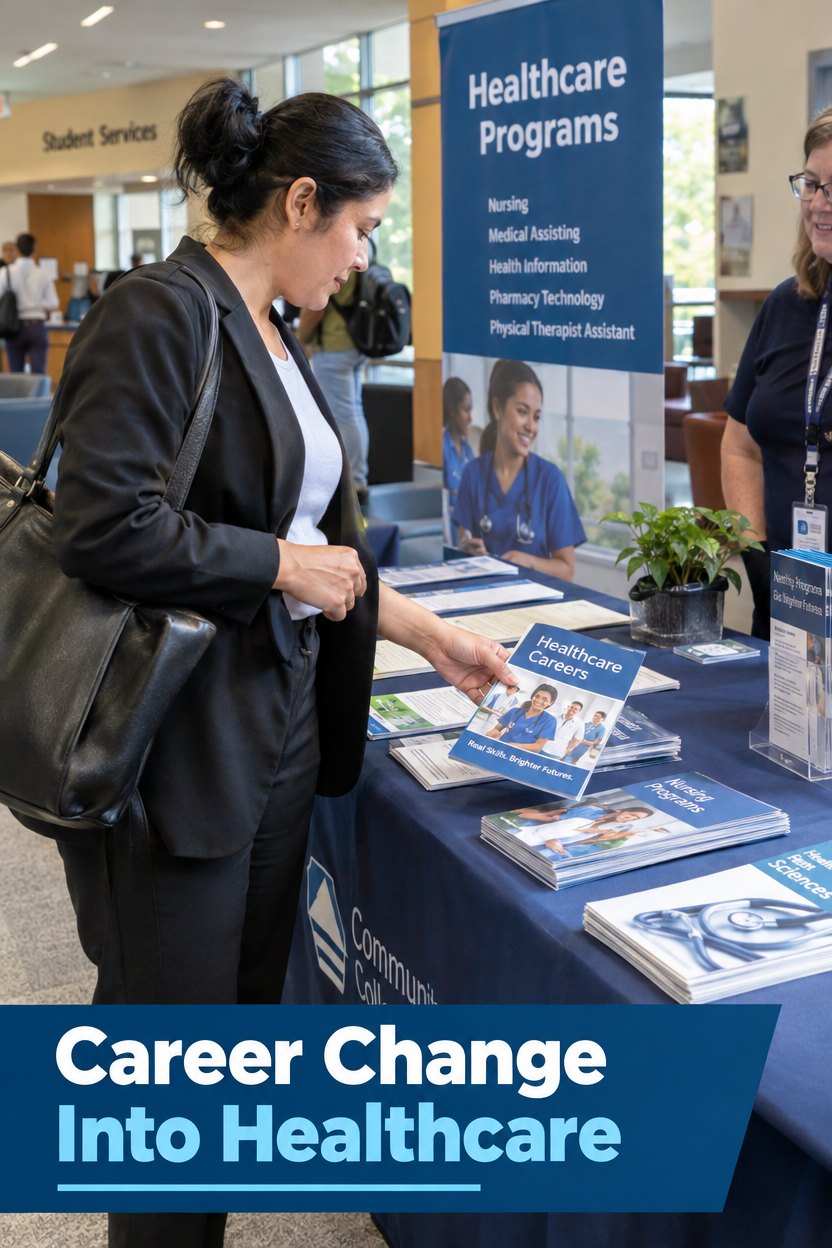
A career change into healthcare appeals to a lot of people. You may want work that feels meaningful, a field that always needs people, or a chance to help others directly. At the same time, healthcare can look like a locked gate. There are many roles, long training, strict rules, and no clear map for someone coming from another field.
In this guide I’ll give you that map. First we will look at why people move into healthcare, and the honest realities that are worth knowing before you start. Then we will look at the main paths, from patient-facing roles to non-clinical ones. Finally, I’ll walk you through how to make the move step by step, with ways to test the field before you commit time and money.
One important note. Healthcare is heavily regulated, and the rules differ a lot between countries, regions, and even employers. This guide is general information, so always check the official requirements in your own area before you plan or pay for anything. Professional bodies and government careers services are the most reliable sources.
The good news is that healthcare is a big field with many doors, and you do not need to choose the hardest one. Many career changers start in a support or non-clinical role, learn the environment, and then decide whether to train further. Let’s look at how that can work.
Key Takeaways
- Healthcare offers many types of roles, from patient-facing care to administration, technology, and public health, so you can choose how close to patients you want to be.
- Training length and licensing rules vary widely, so check official sources in your country before you pay for any course.
- Your existing skills, such as communication, organisation, data, or project work, can carry over, especially in non-clinical roles.
- Test the field first by talking to workers, volunteering, or taking an entry-level job in a healthcare setting.
- Plan the money side early, because training can mean time away from full-time work.
Is healthcare really the right fix?
Take the free Next Chapter quiz. In 3 minutes it shows whether the people, the work itself, pay and hours, or exhaustion is behind your unhappiness, so you know if a new field is the answer.
Why People Move Into Healthcare, and What to Know First
Healthcare draws people for good reasons. It is also a demanding field, and it helps to see both sides. This section covers the real appeal and the real realities, so you move in with clear eyes and not just a hopeful picture.
Wanting meaningful work is a good reason, but it is not the only thing to check. The daily reality of a role matters as much as the mission behind it.
The Pull of Meaningful Work
Many career changers say they want their work to matter. Healthcare offers a clear connection between effort and human benefit. Even in roles far from patients, such as scheduling or data, you can see how your work supports care.
That sense of purpose can make hard days more bearable. But purpose alone does not make a job a good fit. It helps to ask what you would be doing on a normal Tuesday, and whether that suits you.
A Field With Many Kinds of Roles
Healthcare is not one job. It includes hands-on care, diagnostic work, therapy, administration, technology, research, and public health. The range of skills and personalities needed is wide, so there may be a place for how you like to work.
Do not assume that you must be a nurse or a doctor to be in healthcare. Those are only two of many paths, and they are among the longest to train for. Looking at the whole map first prevents you from picking the hardest route by default.
The Emotional Side of the Work
Roles close to patients can involve stress, loss, and difficult conversations. Many people find this deeply rewarding, and some find it heavy. It is worth being honest with yourself about how you handle emotional strain.
One way to learn is to talk to people in the roles you are considering. Ask what the hardest part is and how they cope. Their honest answers give you a better picture than any job advert.
Shifts and Physical Demands
Many healthcare roles involve shift work, long hours on your feet, or on-call duties. If you have children, other responsibilities, or health needs of your own, these details matter a lot. Weekend and night work may be normal in some roles.
Ask about typical schedules before you commit. Some roles, especially in administration, community health, or technology, have more regular hours. Knowing your limits helps you pick a role you can sustain.
Training and Licensing Vary a Lot
Some roles can be entered with short training and on-the-job learning. Others need long degrees, supervised practice, and registration with a professional body. The path depends on the role, the country, and sometimes the employer.
Always check with the official professional body or government careers service in your country. They will list the exact requirements. This is the safest way to avoid paying for a course that does not lead to the job you want.
Money During Training
Training can mean fewer paid hours, tuition fees, or both. For a career changer with bills, that is a serious issue. It is better to look at it early than to discover it halfway through a course.
My guides on how to afford a career change and how much savings you need show how to work out your own numbers. Many people also look at part-time study or employer-supported training.
Healthcare Paths to Consider
With so many options, it helps to group them. Each group has a different mix of training, patient contact, and daily rhythm. Here are the main paths career changers consider, so you can see which direction suits you.
Titles and requirements differ by country, so treat these as groups to explore, not exact job descriptions. Always check local sources for details.
Patient-Facing Support Roles
These are roles where you help patients directly, often under the guidance of nurses or doctors. They often involve shorter training than professional roles and are a common entry point. Examples include care assistants, healthcare support workers, and patient transport roles.
They can be a good way to learn if you enjoy direct care before you commit to longer training. They are also physically and emotionally demanding, so spend time with workers in these roles before you decide.
Technician and Allied Health Roles
This group includes roles that support diagnosis and treatment, such as lab technicians, imaging staff, pharmacy technicians, and therapy assistants. Training is often more specialised than for support roles but shorter than for full clinical professions.
These roles suit people who like technical, detail-focused work and some patient contact. Requirements differ widely, so check which qualifications your local employers and professional bodies accept.
Nursing and Other Registered Professions
Nursing, midwifery, physiotherapy, and similar professions usually require formal degrees or recognised programs, plus registration. The training is longer and often includes supervised practice. They offer a lot of depth and variety once you qualify.
Some places offer accelerated or graduate-entry routes for people who already hold a degree. If this interests you, look carefully at time, cost, and support. My guide on whether you need a degree to change careers explains how to check what a role really requires.
Administration and Coordination
Every healthcare setting needs people to schedule, coordinate, manage records, handle billing, and run operations. These roles may suit you if you have an office, customer service, or project background. They keep you in the field without clinical training.
Your existing experience may carry over strongly here. My guide on transferable skills for a career change shows how to describe it in the language employers use.
Health Technology and Data
Healthcare increasingly relies on software, data, and digital tools. Roles in analysis, support, project management, and systems can suit people from technology and business backgrounds. They offer a way to work in health without direct patient care.
Entry routes differ, and some roles may need knowledge of health data rules. Look at job listings from hospitals, clinics, and health technology firms to see what they ask for, and which of your skills match.
Public Health and Community Roles
Public health and community organisations work on prevention, education, and support at the level of groups and neighbourhoods. Roles include health educators, outreach workers, and program coordinators. They often appeal to people who like helping through teaching and organising.
Many of these roles value life experience and communication skills. They can be a good fit for career changers from teaching, social work, or customer-facing work. Check local charities, councils, and health agencies for openings.
Mental Health and Wellbeing Support
Mental health services include peer support, assistant roles, and professional counselling or therapy, each with a different training route. Some roles are open to people with relevant life experience and short training. Others require formal qualifications and supervised practice.
If this appeals to you, look carefully at what each role requires and what support you would need yourself. This work can be very rewarding and also emotionally demanding, so honest self-awareness helps.

How to Make the Move Step by Step
Once you have a feel for the field, it is time for a plan. The safest approach tests the field before you commit. Here is a step-by-step route into healthcare that protects your time, money, and energy.
Each step should give you information before you spend serious money. That way, you only invest in what you have proven suits you.
Step One: Talk to People in the Roles
Find two or three people who work in the roles you are considering. Ask about a normal day, the hardest part, how they trained, and what they wish they had known. Most people are happy to share if you ask politely and briefly.
You can reach them through friends, local clinics, professional groups, or online communities. These conversations often show you more in thirty minutes than hours of reading.
Step Two: Check the Official Requirements
For each role you like, look up the official requirements for your country. Find out which qualifications are needed, how long training takes, how it is funded, and whether registration is required. Write them down in one place.
This protects you from paying for a course that does not qualify you. If anything is unclear, contact the professional body or an accredited training provider directly and ask.
Step Three: Test With Volunteering or Shadowing
Volunteering at a hospital, care home, or charity, or shadowing a worker, lets you feel the environment first-hand. Even a few days can show you whether the pace, the people, and the tasks fit you.
This is one of the best low-cost tests available. If you love it, you gain confidence and a contact. If you do not, you have saved yourself a long, expensive detour.
Step Four: Consider a Bridge Job
A bridge job is a role in a healthcare setting that you can enter without long training, such as an administrative or support position. It lets you earn, learn the environment, and see where you want to go.
Many employers offer training or support for staff who want to develop. My guide on entry level jobs for career changers shows how to find and win a first role in a new field.
Step Five: Plan Your Training and Money
If your chosen path needs training, work out the cost, the time, and how you will cover your living costs. Look at part-time or evening options, employer support, and any grants or loans in your area. Be realistic about what you can sustain.
Compare routes before you commit. My guide on bootcamp vs degree shows how to vet a program, and the same checks apply to healthcare courses.
Step Six: Rewrite Your CV for Healthcare
Healthcare employers care about reliability, communication, attention to detail, and care for others. Rework your CV so that your past achievements show these qualities. Use examples that match the language in the job adverts.
My guide on how to rewrite your career change CV gives a simple four-step method. A clear summary and relevant bullets make your change feel logical and not random.
Compare the Main Paths
This table gives a general comparison of the paths. Details vary by country and role, so use it to organise your research and not as a final answer.
| Path | Typical training | Patient contact |
|---|---|---|
| Support roles | Short, often on the job | High |
| Technician and allied health | Medium, specialised | Some |
| Registered professions | Long, with registration | High |
| Administration | Short or none | Low to some |
| Health technology and data | Varies by role | Low |
| Public health and community | Varies, often short | Some |
Step Seven: Set a Review Date
Pick a date, such as 90 days from now, to review your progress. Ask what you have learned, what you have tested, and what your next step is. If healthcare still excites you, continue. If not, you have learned cheaply.
My 90 day career change plan gives a three-phase structure that fits well with this. If you are leaving nursing instead of entering, see my guide on non-clinical nursing jobs.

Want a small daily step toward your move?
The Next Chapter Tracker gives you one short task a day, so you can test and plan while you keep earning. Try it for 7 days. If it does not give you a clear next step, email me within 14 days and I will refund you.
Conclusion
A career change into healthcare is possible for many people, and you do not need to start with the longest path. Healthcare offers patient-facing roles, technician work, registered professions, administration, technology, public health, and mental health support. The right one depends on how close to patients you want to be, how much training you can take on, and what your days need to look like.
The safest way in is to test first. Talk to people, check official requirements, volunteer or shadow, consider a bridge job, plan your money, and rewrite your CV for the field. Set a review date so you decide with evidence. This is general guidance, and requirements differ by country, so rely on official sources for details.
If you are not sure a new field is the right fix, take the free 3-minute quiz to find your main cause. Then use the Next Chapter Tracker for one small task a day, at $1 for the first 7 days and then $24 a month. A small, tested first step is the best way into a new field.
FAQ
Can I change careers into healthcare without a medical background?
Yes, many roles do not require a medical background, especially in support, administration, technology, and community work. Clinical roles need specific training. Check official requirements in your country for each role.
What are the easiest healthcare jobs to enter?
Entry-level support and administrative roles often have shorter training and are a common starting point. Availability and requirements vary by location, so look at local job listings and employers.
How long does it take to retrain for healthcare?
It depends on the role. Some support roles train on the job, while registered professions can take years. Check the official route for your target role before you plan your time and money.
Can I work in healthcare without patient contact?
Yes. Healthcare also needs administrators, data and technology staff, researchers, and public health workers. These roles keep you in the field without hands-on care.
Is it too late to move into healthcare at 40 or 50?
Many people enter healthcare later in life, and life experience is valued in many roles. Think about training length, physical demands, and the years you want to work, and plan with those in mind.
How do I test if healthcare is right for me?
Talk to workers, volunteer or shadow, and consider an entry-level role in a healthcare setting. These low-cost tests show you the real work before you pay for training.